In 1917, a crowd gathered outside a small Paris gallery to look at Amedeo Modigliani’s nudes. The pavement was blocked, the police arrived, and the only solo exhibition of his lifetime was shut down. In October 2026, a Modigliani nude from that same year hung in the Grand Palais, priced at more than $100 million, inside a fair ringed by anti-ram barriers and 24-hour security patrols. The painting has not changed. What the city, and the market, fear from a crowd has.
A Show Closed by the Police
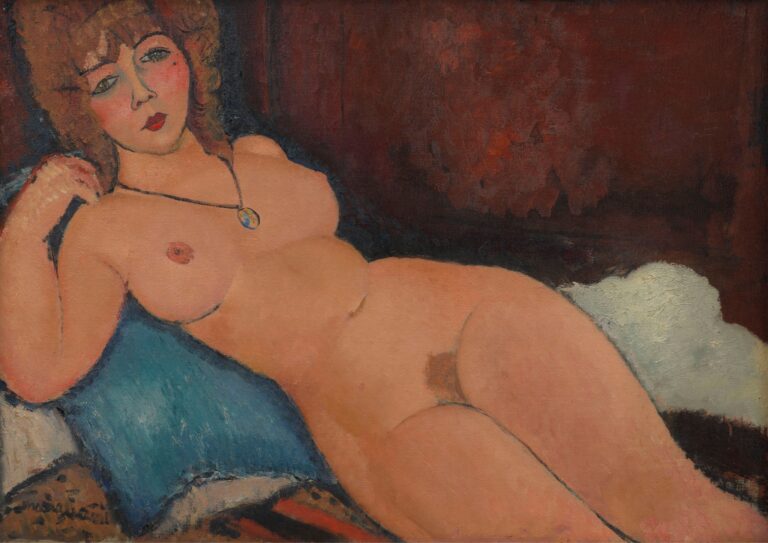
Modigliani’s 1917 exhibition at Galerie Berthe Weill was the only solo show he had in his lifetime. According to the National Coalition Against Censorship’s archive, a nude displayed in the window drew a crowd large enough to obstruct the street, and the police closed the exhibition. The episode is now a staple of Modigliani lore: the artist who scandalized Paris before he was celebrated by it.
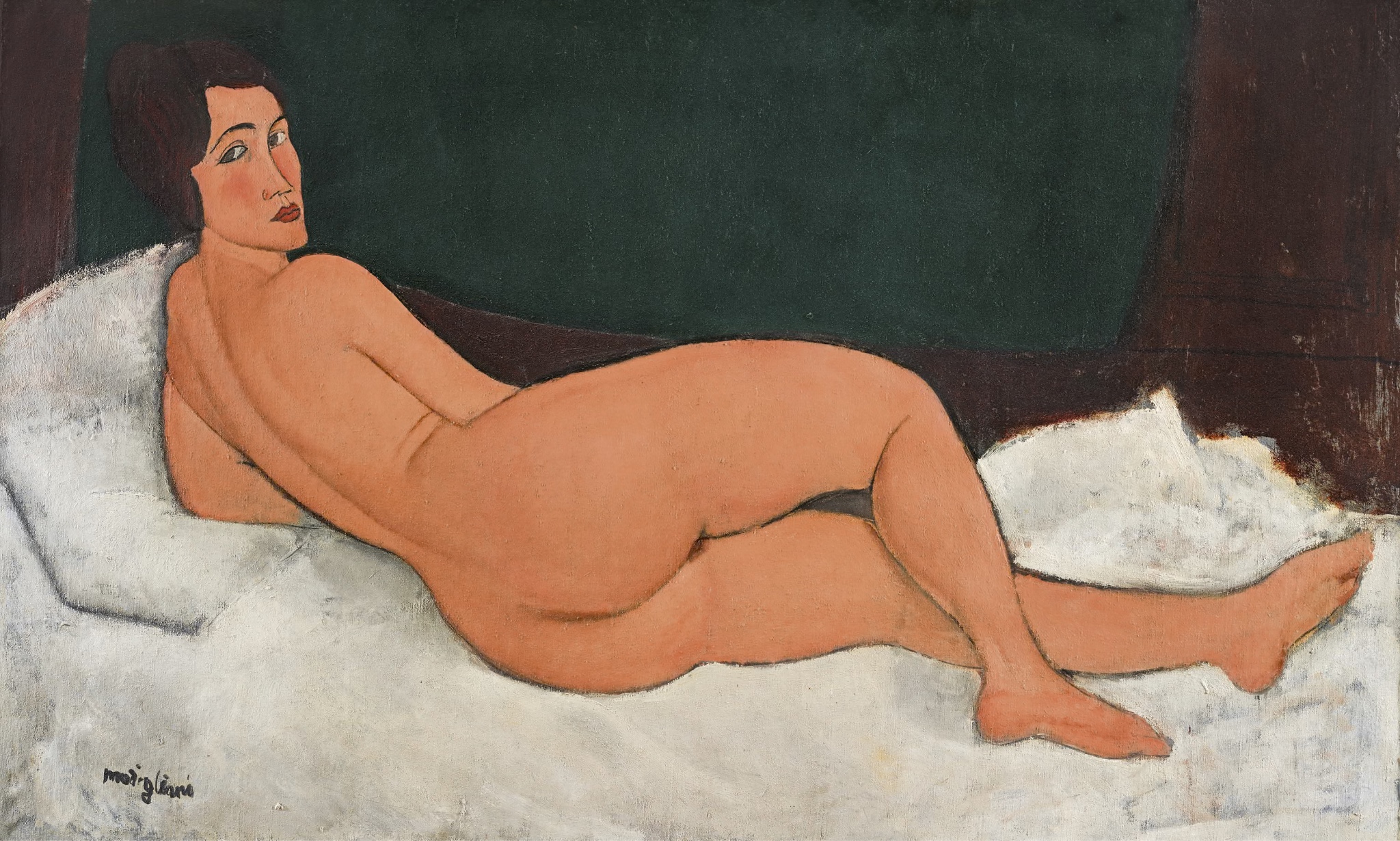
Nu étendu (Lolotte) (1917) is one of the works connected to that show, according to Pace Di Donna Schrader Galleries. The gallery says the canvas was acquired from Modigliani’s dealer in 1920 by the family that still owns it, and that it has not been seen publicly in roughly a century. A painting that vanished into a private collection just after its own scandal, and resurfaces during a different kind of public disorder, is a narrative the market could hardly have scripted.
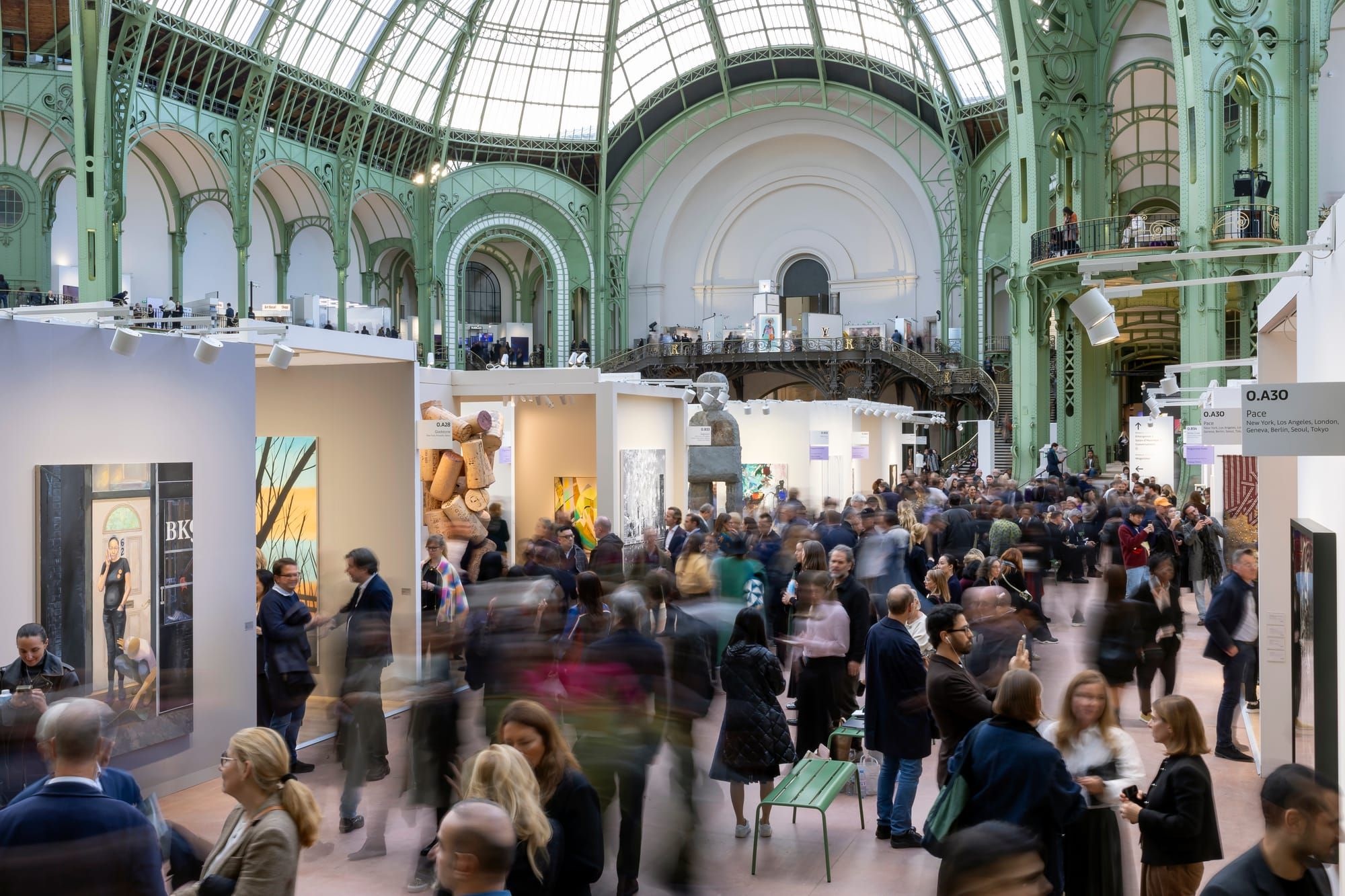
Paris, October 2026: A Fair Behind the Fence
According to ArtReview and Hyperallergic, the unrest began as anti-government protests led by students over conditions in French high schools, then widened to include anger over the cost of living. Over the weekend of October 17–18 it turned to riots and looting in Paris and other cities, with curfews imposed at some flashpoints. On October 17, the Paris Police Prefecture briefly ordered the Grand Palais locked down during installation. On October 19, art students blocked the entrance to the Louvre, closing it for the day. Hauser & Wirth shut its Paris gallery as a precaution, and the Jeu de Paume cancelled an opening.
Art Basel Paris went ahead. The fifth edition, the first under director Karim Crippa, gathered 211 galleries from 41 countries. As Ocula reported, he and his team wrote to VIPs promising “comprehensive safety measures,” and the Avant-Première on October 20 drew a healthy turnout. Collectors told The New York Times they had been fielding anxious questions from peers about whether travel was safe. Adviser Candace Worth described tear gas under her hotel window.
Then, on October 22, the fair announced it would close at 7 p.m. on Friday, October 23, cancelling its Saturday and Sunday public days because of further protests planned in central Paris. The fair was not cancelled outright; it was shortened, leaving the general public a single day after three days of VIP access. Friday visitors were required to bring a government ID. Dealers began scrambling to arrange early crating and shipping, and ArtReview noted that as of October 22 organizers had made no statement on refunds for public tickets or exhibitor costs.
The Painting, the Price and the Paper Trail
The headline number is an asking price, not a sale. Co-founder Emmanuel Di Donna told The Art Newspaper the price was more than $100 million. Exibart reported that the gallery itself said the painting was not yet sold, and USA Art News reported that Di Donna said it would take time to place, even as he described the fair’s sales pace as “like drinking from a fire hose.” Some early coverage of the fair blurred the line between asking price and result, so anyone quoting the figure should be careful to say “priced at” or “offered at.”
The more interesting question for scholars and curators is paperwork. The work does not appear in Ambrogio Ceroni’s catalogue, long the standard reference for Modigliani, but it is included in Marc Restellini’s new catalogue raisonné. The Art Newspaper suggested the sale could become a test of that new catalogue. Il Giornale dell’Arte reported that the painting’s quality and authenticity are not in doubt but that its absence from Ceroni may temper the most immediate buying impulses, while the fair’s exposure and scrutiny could ultimately help its standing. In a market where authority is partly manufactured by reference books, a nine-figure canvas is also a bet on which book the market decides to trust.
Reading the Number: Where $100 Million Sits
Two reference points frame the price. Modigliani’s auction record is $170.4 million, set by Nu couché (1917–18) at Christie’s New York in 2015, including fees. Before that sale, the artist’s record stood at $68.9 million for Nu assis sur un divan (La belle romaine), sold at Sotheby’s in 2010. A $100 million-plus ask for Lolotte therefore sits well below the record but well above where the market stood before 2015. It signals a seller treating the best Modigliani nudes as a category with its own price tier.
As we explored in our examination of the forces that shape how art is valued, part of our Art and Money series, a price reflects more than monetary worth: reputation, institutional recognition, collector confidence and market positioning all contribute. Lolotte touches each of them, with a 1917 backstory, a catalogue raisonné question, a century of unbroken private ownership and an ask that places it in a tier of its own. This is analysis, not a valuation: asking prices at fairs are negotiating positions, and only a completed transaction sets a data point.
A single asking price tells only part of the story. Galerie magazine’s opening-day roundup offers a snapshot of how the rest of the fair’s collectors behaved under pressure:
- Gerhard Richter, Rokokotisch (Rococo Table) (1965), Hauser & Wirth: $10 million
- Julie Mehretu, Rise of the New Suprematists (2001), White Cube: $7.9 million
- Marlene Dumas, Poisonous Proposal (2025), David Zwirner: $3 million
- Lucio Fontana, Concetto spaziale (1953), Thaddaeus Ropac: €1.8 million
- Carmen Herrera, Pavan #37 (1948), Lisson Gallery: $650,000
For comparison, last year’s edition saw two paintings sell for more than $20 million each. Dealers described a market that was active but selective. Hauser & Wirth’s Marc Payot told Galerie that Frieze London and Art Basel Paris now function as a single extended season for selling masterpieces. Thaddaeus Ropac told Galerie that collectors came ready to decide quickly despite some choosing not to travel. The New York Times observed that the preview felt less frenetic and less American-dominated than in 2025. Because the Avant-Première was compressed, most galleries reported only one or two sales.
Who Pays When the Doors Close
The sequencing of an art fair is itself a statement about access. The most valuable transactions happen in invitation-only previews, while the public days come last. When unrest forced a closure, the commercial heart of the fair had largely already done its work, and the public lost two of its three days. Commentators such as Design Scene have asked who bears the cost: exhibitors who paid for booths and now face compressed logistics, the public who lost access, and the institutions that have spent years positioning the fair as a civic cultural event rather than only a marketplace.
Artists feel it too. ARTnews reported that Alicja Kwade was removing her public sculpture outside the Grand Palais early, condemning the violent protesters, and other reports cited fears it could be damaged. Public-facing work is the most exposed layer of a fair, and it is also the layer that justifies the fair’s claim to cultural purpose.
It is worth being precise about the protesters. Their stated grievances were school conditions and the cost of living, not the art market. ArtReview reported that social media accounts urged supporters to assemble at the fair under the banner “Against Art Basel,” which tells us how visible the fair has become as a symbol of concentrated wealth in the city, whether or not it was the intended target.
That perception points to a larger question than one fair. As we examined in our analysis of how access and wealth shape participation in the art market, the next installment of our Art and Money series, visibility and opportunity are often determined by financial resources as much as by artistic merit, and a week like this one makes that hard to ignore.
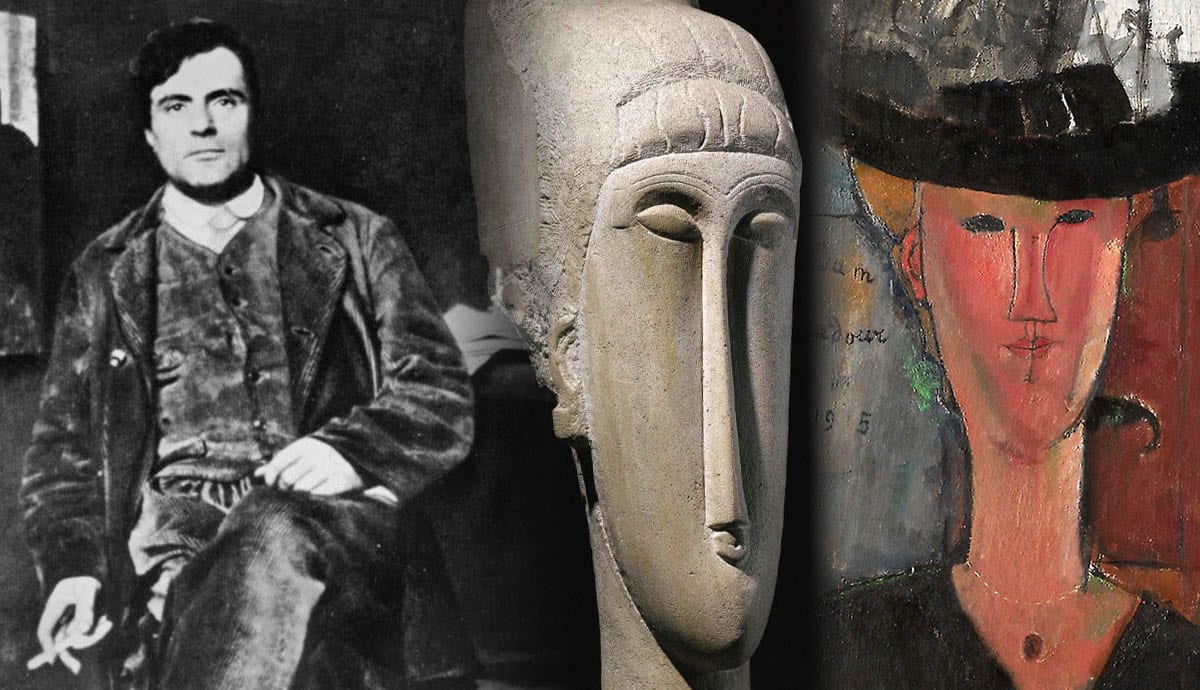
Who Is Left at the Window?
In 1917, the crowd at the window was an audience before it was a threat, and the police treated it as the problem. In 2026 the arrangement was inverted: the public came last in the fair’s sequence and was the first to be shut out. That asymmetry is the quiet subject of that week, and it falls differently on each part of the art community.
For artists, it shows how unevenly a market event distributes its risk. Million-dollar sales and emergency crating shared one building, and at least one public sculpture was pulled early. It is fair to ask whether exhibition agreements say who decides when art outside the walls should come in, or who pays when a fair is cut short. For curators, the question runs deeper. A canvas unseen for a century may eventually enter public view or vanish again behind a private door, and which of those happens will depend partly on which reference book institutions decide to trust. The students’ blockade of the Louvre, meanwhile, is a reminder that museums and fairs share one city and one public, whether or not they share a mission.
For collectors, due diligence has widened. Continuous ownership since 1920 is a strong provenance story, yet even a clean history does not settle every buyer’s confidence. That is why maintaining detailed artwork and provenance records is an essential part of responsible collecting: a work’s history and documentation can shape its market standing as much as its quality. That week also put security and travel contingencies beside provenance in the file. Those who came anyway suggested that the top of the market is mobile and selective, but they also saw, from inside the barriers, what most of Paris could not. An art world that has always lived on the public’s curiosity now has to decide how much of that public it can afford to let in.
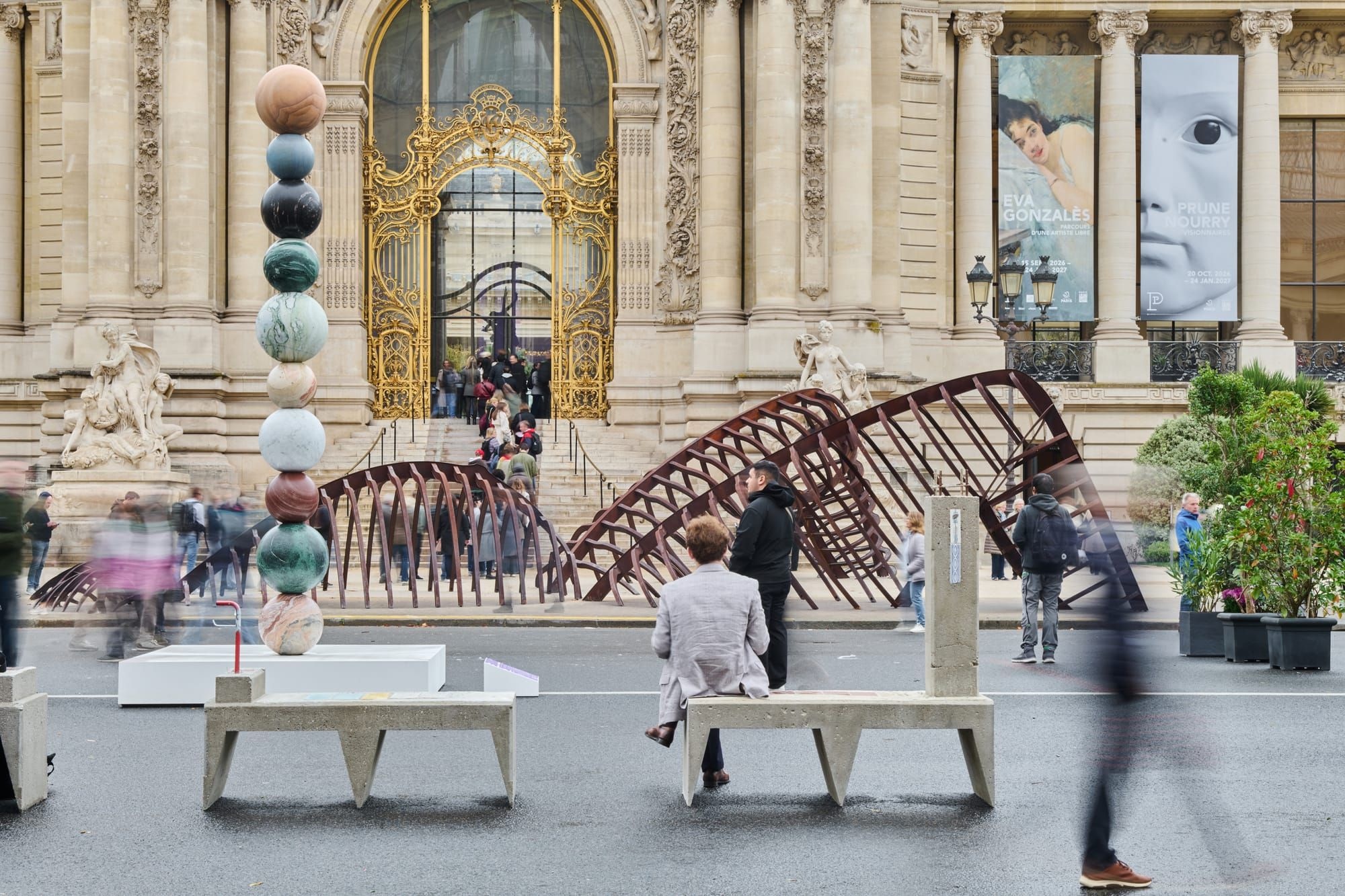
Scandal Then, Security Now
In 1917, authorities acted to shield the public from an image they considered indecent. In 2026, authorities and organizers acted to shield an image, and the market that values it, from the public. The painting is the same, the city is the same, and the underlying question is also familiar: who gets to look, who gets to buy, and who decides what a masterpiece is worth.
Whether Lolotte finds a buyer at $100 million or more will be a data point for the Modigliani market. What it already offers is a mirror. The picture reportedly priced highest in the building was a Modigliani nude, by an artist Paris once shut down, and it was displayed that week behind barriers erected to keep the city out.